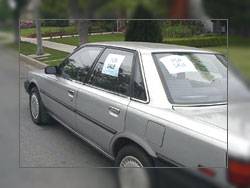
Cubstoners are trying to get around the law by selling their cars on the street by pretending to be private sellers
Curbstoning is the practice of auto dealers masquerading as private parties when selling their cars. Curbstoning car dealers use the practice as a way to sell inferior cars to unsuspecting consumers. There is probably a street or parking area near your residence where there are numerous cars for sale. Many of these cars are placed in public view by “curbstoners”, so named because they are parking the cars along a curb. Many of these curbstoned cars may very well be lemons car dealers can’t sell on their lots.
Crooked auto dealers use curbstoning as a way to circumvent state laws regarding the sale of cars. States have limits regarding how many cars a person may buy and sell in a given period without having to be a licensed car dealer. Licensed car dealers have requirements that they have to meet to stay in business. Curbstoners do not.
The Internet is mass producing a new crop of curbstoners
The Internet is proving to be fertile ground for curbstoners. The Web makes it very easy for sellers to conceal both their identity and location from buyers and government agencies that try to track them. Auction giant eBay ( www.ebay.com ) has become the favorite stomping ground for people looking to scam unsuspecting buyers.
How curbstoning scams work
Before a curbstoner can scam a buyer, they must have a lousy car to sell. These cars are typically acquired at the low rent auto auctions held at wrecking yards and towing company impound lots. These cars are then “readied” for sale which is to say that they are made to look like a decent car despite numerous problems.
Many of the cars are placed on eBay, but they can also appear at autotrader.com ( www.autotrader.com ) and other similar sites. These scammers use many other scamming techniques while conducting their online sales with affinity fraud being one of the more popular methods. Another popular tactic is to use low-resolution photos. Poor quality photos easily hide cracked windshields, dents, rust, scratches, and faded paint.
Government agencies have limited resources in containing curbstoners
States have agents assigned to combat curbstoning. Unfortunately, the agents are few in number and also have other duties. There are very few sanctions against curbstoners. Criminal prosecutions are almost unheard of. States can sanction licensed dealers who get caught in the act of curbstoning, but even that remedy is rare.
eBay has also faced an uphill battle in combating this type of fraud. eBay will suspend an account and cooperates with law enforcement. What often happens, however, is that once an account is suspended, the curbstoners just switch to a new user ID and resume the fraudulent sales.
If you are buying a car from someone that does not have a title in their name be careful. A consumer buying a vehicle from a person that is not a licensed dealer runs a high risk that:
- The vehicle may be stolen
- You may not get a clear title, unless administrative remedy or a court order is sought and ruled in you favor.
- The vehicle may have a rolled-back odometer
- The vehicle may be a salvaged, reconditioned, or flood damaged
- The vehicle may have a lien that has not been properly released.
- The vehicle may have been sold for EXPORT ONLY
Vigilance is the key to avoiding curbstoners
Given the fact the government is not in a position to help you, and eBay is being run amok by scammers, the responsibility of not getting scammed falls squarely on the shoulders of the consumer.
- Adhere to the age old adage: If it seems too good to be true, it probably is. In the case of a car, if the price seems impossibly good for what you are getting, you could be getting scammed.
- Check the driver’s license of the seller against the car’s title. If you are buying the car online this will require that you request clear scanned images of both documents. If the names don’t match – DO NOT BUY THE CAR.
- Have the car inspected by a mechanic. This is sound advice that very few people ever heed when purchasing a used car. A good mechanic has an experienced eye that can spot problems not evident to most people.
- CarFax Reports. These reports will identify any cars that have been salvaged (i.e. vehicle has been totaled), been in major accidents, etc. Even better, the reports will show title transfers. If there have been more than 1 or 2 title transfers in the past couple of years, run – don’t walk – away from the deal.
- Purchase a car from a reputable auto dealer. Identifying a reputable dealer can be problematic, but they do exist. Dealers who have been in business for a long time and have certified used car programs are a good bet. They are a much better bet than buying from somebody who won’t be able to contact when the deal goes sour.
- Strongly consider not buying a car online. If you do purchase a car online, try to pick it up in person and request that the seller allow you to back out of the deal if you are not satisfied with the condition of the car when you see it in person.
Verify a curbstoned vehicle’s history before you buy
If you’re a buyer, AutoCheck® or another tracing service can give you a detailed history of the car and alert you to serious problems, such as rolled-back odometers or a salvage title that indicates the vehicle’s been in a serious wreck or if it’s been damaged by water. You’ll need the car’s vehicle identification number, or VIN, usually found on the left side of the dash or the driver’s side door post. For a small fee you can get an unlimited number of history reports so if you’re out shopping you can check on the history of every car you’re interested in. Since curbstoned cars aren’t subject to the same laws and regulations as the ones you find on a dealers lot these reports can save you a bundle.
Your description of curbstoning is not accurate. Curbstoning is the act of selling or attempting to sell a vehicle by an unlicensed dealer (each state has a maximum number of vehicles an individual can sell before being licensed) or a licensed dealer selling a vehicle privately that the dealership acquired in the course of business.
I can’t believe I’m reading this.In fact curbstoning is also very real in the dealership!! Well known luxury dealerships.And there is a lot more going on than just the flood vehicles,titles,leins,and false vins.And they are advertised on car .com,autobaun,And they even change the nmvtis report,car,fax,and other Vin checks.I know because I’m a victim of this car ring and have documented before during and after the sale.I have been fighting this for 11/2 yrs and have followed what they warn us to do and more.This ring will do anything to not get caught and unfortunately I’m being targeted for phoney, bonds,insurance,and drugs.They along with public officials have temporarily detoured me to fight this problem.I hold the proof of this corruption and I will not give up!We should not have to be warned of our right to purchase a necessity of a need to provide for our family’s.These crime rings who bring in millions and avoid taxes at our expense should be put in prison for taking our rights away.!!
I know we have to get these laws changed and yes the Government probably doesn’t have much to go on because of the complexity of the scheme.But one thing they can do is take the consumers complaint on a more expedited level to get them at the beginning.It will nip alot more than just that consumers complaint from taxes,export,bid rigging.Im not a business educated person and don’t understand the trading and stock but I’m smart by experience and sometimes that better you’ve learned from all levels.